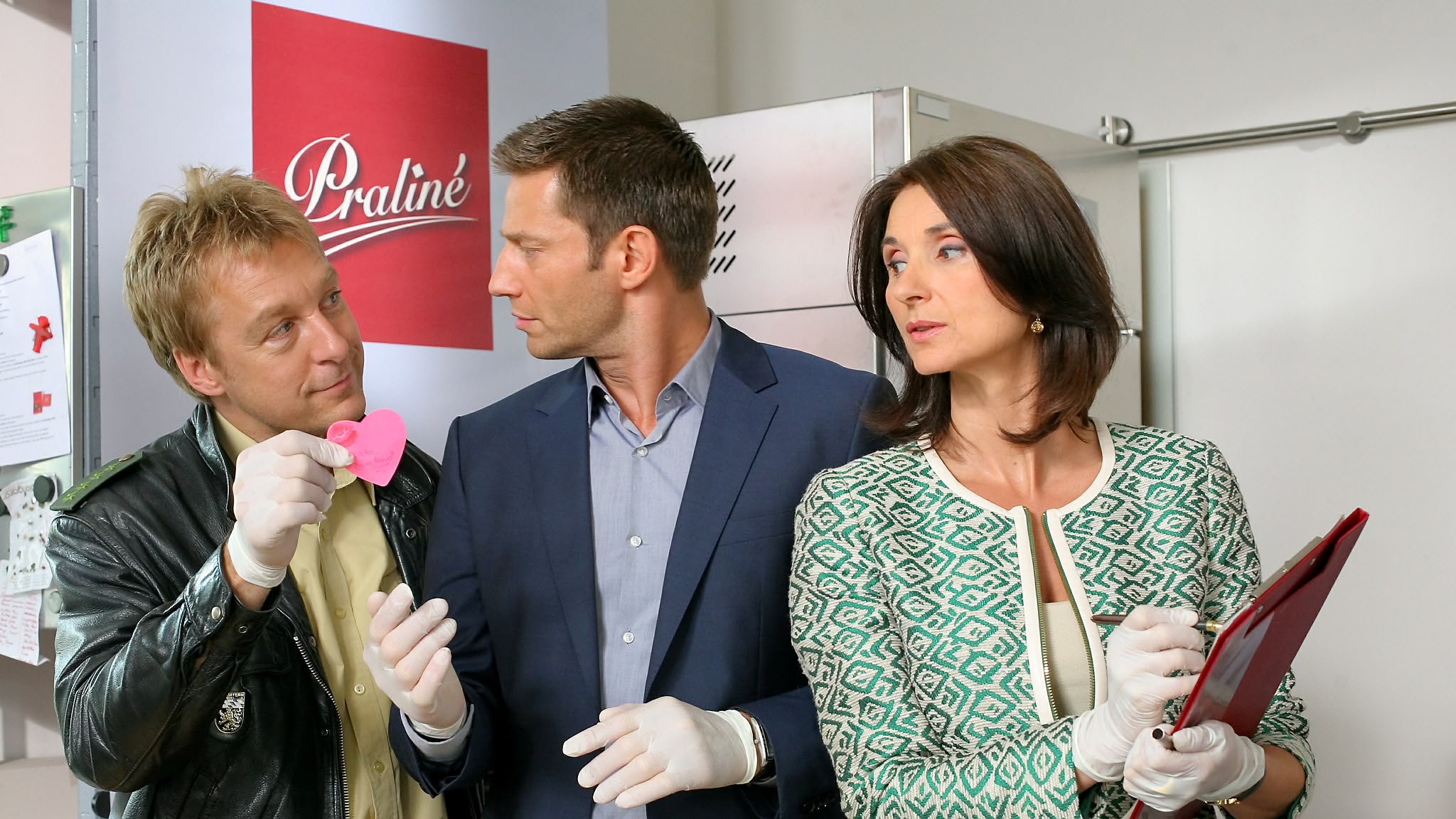
The Delectable Crime Scene: Ralf Zauner's Last Stand in "Praliné"
The idyllic Bavarian town of Rosenheim, usually a picture of serene charm, often becomes the backdrop for perplexing mysteries in the popular German crime series, Die Rosenheim-Cops. Among its many memorable cases, the episode titled Rosenheim Cops Tod Im Schokoladenladen (Death in the Chocolate Shop) stands out, presenting viewers with a classic whodunit set amidst artisanal chocolates and simmering resentments. The peaceful facade of the "Praliné" chocolate shop is shattered when its owner, Ralf Zauner, is discovered brutally murdered, bludgeoned to death. His fiancée, Marianne Barisch, is understandably distraught, but her grief only deepens the mystery: who could have committed such a heinous act?
As the seasoned investigators, Kommissar Sven Hansen and the ambitious Kommissarin Danner, delve into the case, they quickly uncover a complex web of personal and professional conflicts. The suspects aren't shadowy figures from afar but individuals deeply embedded in Zauner's world, presenting motives born from both intense professional rivalry and profound personal betrayal. This episode brilliantly explores the dark underbelly of ambition and the devastating consequences when dreams turn to dust.
Martin Richter: The Resentful Employee or a Master Craftsman Denied?
One of the first individuals to fall under the suspicious gaze of the Rosenheim Cops is Martin Richter, Zauner's dedicated employee at "Praliné." On the surface, Richter appears to be a diligent worker, a master of his craft, meticulously creating the exquisite confections that brought the shop its renown. However, beneath this veneer of loyalty, a deeper narrative of simmering resentment quickly emerges. The investigators learn that while Richter poured his heart and soul, along with considerable skill, into the daily operations and creative output of "Praliné," it was Zauner who consistently claimed the credit and reaped the financial rewards. This classic scenario of uncredited labor and stolen accolades often fuels a potent mix of frustration and bitterness.
Consider the psychological toll this dynamic would take. Imagine dedicating countless hours, honing your expertise, only to see someone else bask in the glory and profit from your genius. The constant denial of recognition, the feeling of being exploited, could slowly erode even the most patient individual's resolve. Did Richter's quiet desperation finally reach a breaking point? Was the desire for justice, for recognition, or perhaps even a share of the wealth he felt he had earned, strong enough to push him to eliminate his exploitative boss? The detectives must meticulously piece together Richter's state of mind, his opportunities, and whether his long-suppressed anger could have culminated in such a violent outburst. It’s a compelling motive that speaks to the universal struggle for fairness and respect in the workplace.
Alois Krantz: The Ruthless Rival or a Desperate Businessman?
Simultaneously, the investigation broadens to include Alois Krantz, a prominent figure in Rosenheim's confectionery scene and a direct competitor to Zauner. Krantz's potential involvement is immediately compelling, offering not one, but two potent motives that underscore the cutthroat nature of business. Firstly, Krantz harbored significant animosity towards Zauner for luring away Martin Richter, his former and presumably talented employee. This loss would not only have impacted Krantz's operational capacity but also delivered a painful blow to his professional pride and market position.
However, the second motive presents an even more dire scenario for Krantz: Zauner's aggressive expansion plans. Ralf Zauner, never one to rest on his laurels, reportedly aimed to expand "Praliné" by acquiring Krantz's own premises. This threat wasn't merely about losing a customer or a skilled employee; it was about the potential collapse of Krantz's entire business, his livelihood, and perhaps generations of family legacy. Facing such an existential threat, would Krantz resort to extreme measures to protect his empire? Did he see Zauner's demise as the only way to prevent his own downfall and secure the future of his кондитория? The stakes for Krantz were incredibly high, painting a picture of desperation that could easily push an individual to drastic actions. The Cops must weigh whether Krantz’s fear and competitive rage surpassed the boundaries of legal conduct, transforming a business rivalry into a fatal confrontation.
Unraveling the Motives: A Deeper Dive into the Suspects' Psyches
Understanding the potential culprits in Rosenheim Cops Tod Im Schokoladenladen requires more than just identifying their connection to the victim. It demands a psychological exploration of the pressures, resentments, and fears that could drive an individual to murder. Both Martin Richter and Alois Krantz represent archetypal figures in crime narratives, each embodying a different kind of desperation.
The Weight of Uncredited Labor: Richter's Plight
Martin Richter’s potential motive resonates deeply because it taps into a universal human experience: the desire for recognition and fair compensation for one's efforts. In many workplaces, the credit for hard work often goes to those in leadership positions, leaving the actual creators feeling invisible and undervalued. This can lead to a slow burn of resentment that, over time, can fester into dangerous anger. Richter, by all accounts, was the true artisan of "Praliné," the one whose skill ensured the quality and reputation of Zauner's brand. Yet, Zauner, as the owner, took the public applause and the financial rewards, effectively sidelining Richter's contributions.
Such a dynamic can lead to a profound sense of injustice. Imagine the daily grind, the creative effort, the pride in craftsmanship, all overshadowed by a boss who seemingly takes all the glory. This isn't just about money; it's about dignity, respect, and the fundamental human need to be acknowledged. Did Richter finally snap under the cumulative weight of this injustice? Was Zauner's continued arrogance or perhaps a particularly galling slight the final straw that broke the camel's back? The investigation into Richter would likely focus on his emotional state, any recent arguments, or expressions of frustration that could indicate a build-up of murderous intent. It's a crime born not of pure malice, but of despair and a desperate yearning for what he believed was rightfully his.
The Threat of Expansion: Krantz's Desperation
Alois Krantz’s motives are equally powerful, driven by the primal instincts of survival and the fierce protection of one's territory. In the competitive world of business, threats of acquisition and expansion can be as brutal as any physical conflict. For Krantz, Zauner's ambition to take over his premises wasn't just a business maneuver; it was an assault on his entire livelihood, his identity, and potentially, his family's legacy. Losing an employee like Richter was certainly a blow, but losing his entire shop would be catastrophic.
This situation would have placed Krantz under immense psychological pressure. Desperation can drive individuals to acts they would never consider under normal circumstances. The fear of losing everything – his business, his status, his financial security – could easily overshadow moral considerations. Did Krantz see Zauner's death as a pre-emptive strike, a necessary evil to safeguard his future? Was it an act of self-preservation, a desperate attempt to eliminate the threat before it materialized? The detectives would explore Krantz's financial state, any overt threats or confrontations with Zauner, and his history of dealing with business rivals. This motive speaks to the dark side of ambition and competition, where the line between legitimate rivalry and criminal intent can become dangerously blurred. For a fascinating look at the intricate web of potential motivations, delve into Tod im Schokoladenladen: Unraveling Motives Behind Zauner's Murder.
Detective Dynamics and Unexpected Twists: The Rosenheim Cops' Challenge
The charm of Die Rosenheim-Cops lies not only in its intriguing mysteries but also in the dynamic interplay between its quirky characters and the quaint Bavarian setting. In Rosenheim Cops Tod Im Schokoladenladen, Kommissar Hansen and Kommissarin Danner face a classic dilemma: two strong suspects, each with compelling motives. This sets the stage for a meticulous and often amusing investigation, characteristic of the series.
Hansen and Danner: A Partnership Under Pressure
Sven Hansen, with his calm demeanor and sharp observational skills, often balances the more impulsive or ambitious tendencies of his partners. Kommissarin Danner, on the other hand, approaches the case with a keen eye for detail and a desire to prove herself, especially as she harbors expectations of leaving Rosenheim for a promotion or a new posting. This specific ambition adds an underlying tension to her approach; she wants to solve the case efficiently and flawlessly. Their contrasting personalities, however, often lead to a synergistic investigative process, where different perspectives combine to uncover crucial clues.
The challenge for Hansen and Danner is to navigate the conflicting narratives presented by Richter and Krantz. They must sift through alibis, witness testimonies, and forensic evidence to determine whose motive, if any, translated into murderous action. Their investigation would involve painstaking interrogations, revisiting the crime scene for overlooked details, and leveraging the support of their colleagues in the Kommissariat, from Frau Stockl's indispensable administrative support to Policeman Michi Mohr's street smarts. Every alibi needs to be scrutinized, every secret uncovered, and every lie exposed to find the truth behind Zauner's brutal end.
The Enigmatic Felix Seitz: A New Variable
Just when the investigation seems to be narrowing down, the plot of Rosenheim Cops Tod Im Schokoladenladen takes an unexpected turn with the appearance of Felix Seitz at the Kommissariat. The introduction of a new character, particularly one who shows up unannounced, often signals a significant shift in the narrative. Is Felix Seitz another potential suspect, an overlooked witness, or someone who holds a key piece of information that could entirely reframe the case? His sudden appearance suggests that the initial tidy theories about Richter and Krantz might be incomplete, or even entirely misleading. This classic narrative device keeps viewers on the edge of their seats, reminding them that in the world of the Rosenheim Cops, things are rarely as they first appear.
The arrival of Felix Seitz adds a layer of complexity, potentially introducing new motives, new connections, or even a completely different perpetrator. It forces Hansen and Danner to rethink their assumptions, to broaden their scope, and to accept that their preconceived notions about Zauner's murder might be far from the truth. This twist embodies the unpredictable nature of crime investigations and highlights the meticulous process required to uncover the whole story, even when a seemingly clear path presents itself. For a deeper dive into the immediate aftermath of the crime and the initial police response, explore our analysis on Rosenheim Cops: Who Killed Ralf Zauner at Praliné Chocolate?.
Beyond the Suspects: What Makes a Compelling Crime Story?
The enduring appeal of episodes like Rosenheim Cops Tod Im Schokoladenladen lies in their ability to weave together a believable plot with relatable human emotions. A great crime story, whether in fiction or based on real events, transcends the simple act of murder and delves into the 'why' – the motives, the psychological landscapes of the characters involved, and the societal pressures that often contribute to criminal acts.
Practical Tip for Viewers: How to Spot a Good Whodunit:
- Layered Motives: The best mysteries offer more than one obvious motive, allowing for misdirection and deeper character exploration, much like the employee vs. rival dilemma in Zauner's case.
- Human Element: Focus on the emotional impact of the crime – the victim's past, the suspects' struggles, and the investigators' determination.
- Unexpected Twists: A good mystery keeps you guessing, often introducing new information or characters (like Felix Seitz) when you least expect it, turning your initial theories on their head.
- Realistic Investigation: While fictionalized, the process of gathering clues, interviewing witnesses, and piecing together evidence should feel credible.
The Zauner murder, with its stark contrast between the resentment of an overlooked employee and the desperation of a threatened rival, provides a fertile ground for exploring these themes. It's a testament to the series' writing that these conflicts feel genuine and impactful, pulling viewers into the core of the mystery and inviting them to play detective alongside Hansen and Danner.
Conclusion
The murder of Ralf Zauner in "Praliné" during the Rosenheim Cops Tod Im Schokoladenladen episode presents a compelling and classic crime narrative. With strong, well-developed motives for both the resentful employee Martin Richter and the desperate rival Alois Krantz, the case challenges Kommissar Hansen and Kommissarin Danner to look beyond the obvious. The unexpected arrival of Felix Seitz further complicates matters, ensuring that the resolution is far from straightforward. This episode serves as a prime example of why Die Rosenheim-Cops continues to captivate audiences: its ability to blend picturesque settings with intricate plots, believable characters, and a nuanced exploration of human motives. Ultimately, the Zauner murder isn't just about who struck the fatal blow, but about the simmering resentments, the cutthroat ambition, and the unexpected turns that define both business and the human heart.